Define what one useful result means
A generated clip is not automatically an accepted shot, and an accepted shot is not automatically a finished scene. Define the unit you are planning around. For a fictional dialogue test, a useful result might be one reviewed exchange with recognisable characters, understandable speech and a coherent cut.
List the decisions still open: character look, voice direction, framing or action. Testing all of them at once makes the result difficult to interpret. Stabilise what you can and reserve the experiment for the specific uncertainty you need to resolve.
Separate planned actions from uncertain retries
Count the initial candidates you intend to make, then set a separate allowance for revisions. Check current generation estimates in the relevant workflow before committing resources. Do not convert a credit balance into a promised finished runtime without evidence from the actual production choices.
Include the time needed to inspect, compare and assemble results. A plan can stay within its generation allowance while becoming impractical because review work expands. Name who will make the decision and what evidence they need before requesting another variation.
Write a test budget with a decision point
Set a limit and a stop condition before the experiment begins. If the required action remains unreliable after the agreed attempts, the next decision may be to simplify staging, change coverage or revise the brief. Another batch should answer a new question rather than repeat an unexplained failure.
This fictional planning table uses placeholder values deliberately. Replace them with current estimates and observed results; they are not Wrong Opera pricing or performance claims.
| Plan field | Record |
|---|---|
| Question | Can the key handover read clearly in sequence? |
| Initial candidates | Choose a small count before beginning. |
| Resource estimate | Record the current estimate for each planned action. |
| Review criterion | Object identity, handover clarity and continuity. |
| Stop rule | Pause at the agreed cap and choose the next approach. |
Update the estimate from actual attempts
Record how many candidates were produced, how many were accepted and why others failed. Separate changes caused by a new creative direction from failures to meet an unchanged requirement. Those categories suggest different improvements to the next plan.
Use the test to revise the estimate for similar work, while preserving uncertainty for new characters, actions or formats. A successful close-up does not establish the effort required for a crowded moving scene. Keep assumptions visible so a production discussion can challenge them before they become commitments.
The captured Workbench displays costs beside individual actions, including wireframe, keyframe and animation controls. This is why the estimate should list operations rather than divide a credit package by promised film minutes. The balances and rates in the screenshot are historical demo data; read the current action estimate before each real run.
For the pilot, keep one row per attempt: shot, operation, model or quality setting if available, credits charged, elapsed wait, active review time and accept/reject reason. Sum all attempts contributing to an accepted shot, including discarded versions. Report accepted seconds separately from generated seconds. Until you have those records, mark the cost as an assumption and use a spending cap rather than presenting it as a measured saving.
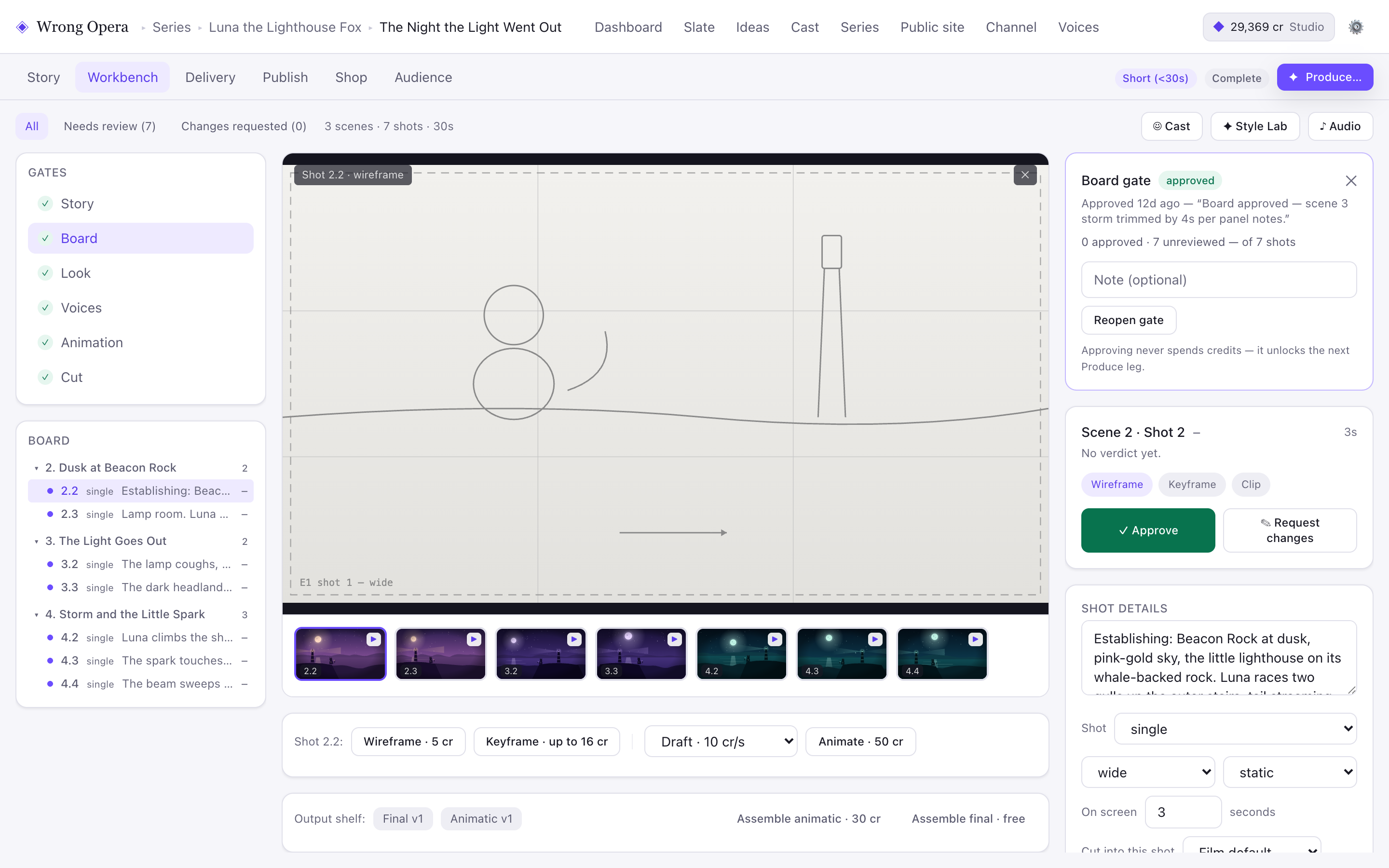
The sample action bar makes individual generation operations visible. Its displayed credit amounts are not a current price quote or evidence of the cost of an accepted scene.
Real product interface captured 7 September 2026, using fictional built-in demo data. Approval notes and balances are sample data. Any animation or final-cut playback shown uses still-image fixtures, not a measured production result.
Open full-size product screen ↗Questions & answers
Should I plan a fixed number of retries for every shot?
Use a provisional allowance, then adjust it to the difficulty and evidence available. Different actions can require different approaches, and a universal retry count can conceal the real uncertainty.
What if the test exceeds the cap?
Pause and review the failure pattern before continuing. Decide whether a changed brief, simpler staging or another method has a better reason to succeed, then approve a new bounded experiment if appropriate.
Evaluate the workflow with your production team.