
Story testing is most useful while you can still change a scene cheaply. Wrong Opera includes simulated audience testing within its production workflow, letting creators explore reactions before moving into rendering. Treat simulated responses as material for creative investigation. They are not real audience research, measured demand or a reliable prediction of commercial performance.
1. Ask a question that can change the script
Choose a specific uncertainty rather than asking whether the story is good. For example: will viewers understand why a museum cleaner trusts a mysterious message, or does that decision feel convenient?
Write down what you currently believe and what would make you reconsider. This helps you avoid accepting only feedback that supports the version you already prefer.
2. Describe the intended audience and experience
State who you are creating for, the format and the tone. A suspenseful short for adults invites different expectations from a comic adventure for younger viewers. Supply the relevant script or outline and explain where the passage sits in the story.
Avoid reducing an audience to a stereotype. Interests, familiarity with the genre and viewing context can be more useful than a broad demographic label.
3. Read the reasoning behind a reaction
Look for references to specific moments. A response saying the cleaner's choice is confusing becomes useful if it points out that the message has never been tested. A general statement that the ending is exciting gives you less to act on.
Separate comprehension issues from taste. Viewers may understand a sad ending perfectly and still prefer a happy one; those are different creative questions.
4. Change one meaningful story element
Create a revision that addresses the suspected issue. Let the cleaner test a small prediction before making a consequential choice. Keep other scenes stable so you can compare the versions against the same question.
This is a structured creative comparison, not a controlled experiment with real participants. A more positive simulated response is a reason to inspect the revision, rather than proof that it works.
5. Check the story independently
Read both versions yourself, then ask someone unfamiliar with the premise to explain the protagonist's decision in their own words. Where practical, involve people from the audience you hope to reach.
Ask what they understood before sharing your explanation. Leading questions can hide the exact misunderstanding you need to find. Keep human feedback clearly separate from simulated responses in your notes.
- Can a reader explain the character's goal?
- Does the decisive choice follow from earlier information?
- Does the ending resolve the question the opening raises?
6. Turn feedback into production decisions
Record the revision you chose and why. Identify any moment that storyboards must make especially clear, such as the cleaner verifying the first prediction. This turns an abstract discussion into a shot-planning requirement.
After publication, revisit the hypothesis using actual audience analytics and comments. Real behaviour adds evidence that simulation cannot provide, though it still requires context and careful interpretation.
Use the Story view as the record you review after feedback. In the captured sample, the premise, beat durations and script can be inspected together. If feedback suggests that a character’s reason for acting is unclear, identify the exact beat and script passage you will change before touching the shot plan.
Keep a short decision log: original question, simulated response, your interpretation, change made and evidence still needed from people. Do not turn a predicted retention curve or simulated preference into a claim about actual viewers. A human review should use the revised material without first telling participants what the simulation predicted.
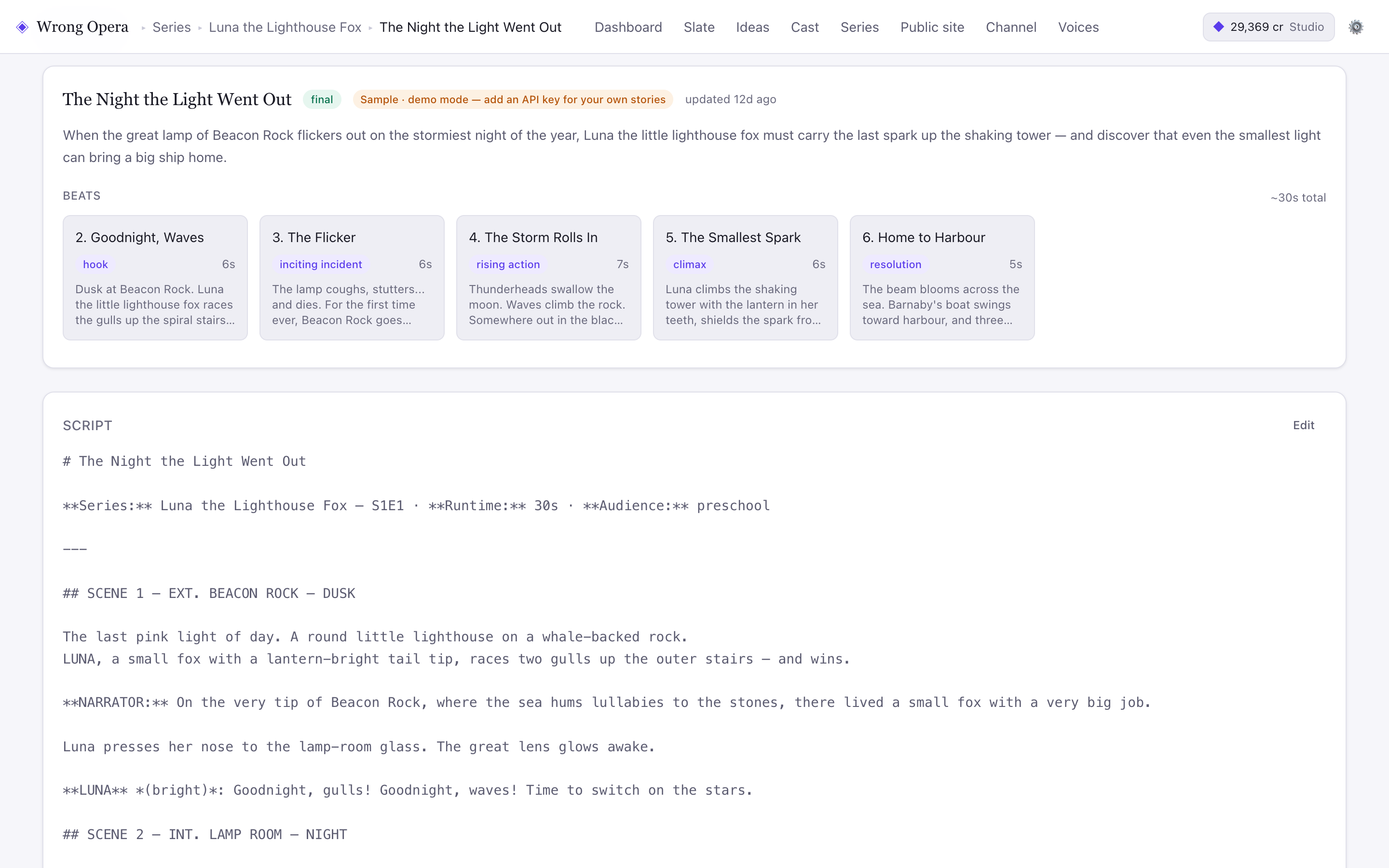
The Story screen is the material to revise after feedback. This capture does not display an audience panel or establish how real viewers responded.
Real product interface captured 7 September 2026, using fictional built-in demo data. Approval notes and balances are sample data. Any animation or final-cut video slot shown holds a still placeholder frame.
Open full-size product screenQuestions & answers
Is a simulated audience the same as a focus group?
No. A simulation generates possible responses; a focus group involves actual participants. Use clear labels so collaborators understand which kind of feedback they are reviewing.
Can story testing predict a hit?
It should not be treated as a promise of popularity or revenue. It can help you investigate clarity, motivation and structure, which remain only part of what shapes a real audience's response.
When should I stop revising?
Stop when the story answers your chosen questions well enough to proceed and further changes lack a clear purpose. Record unresolved risks so you can watch for them in boards, edits and real viewer feedback.
Ready to put the idea to work?